
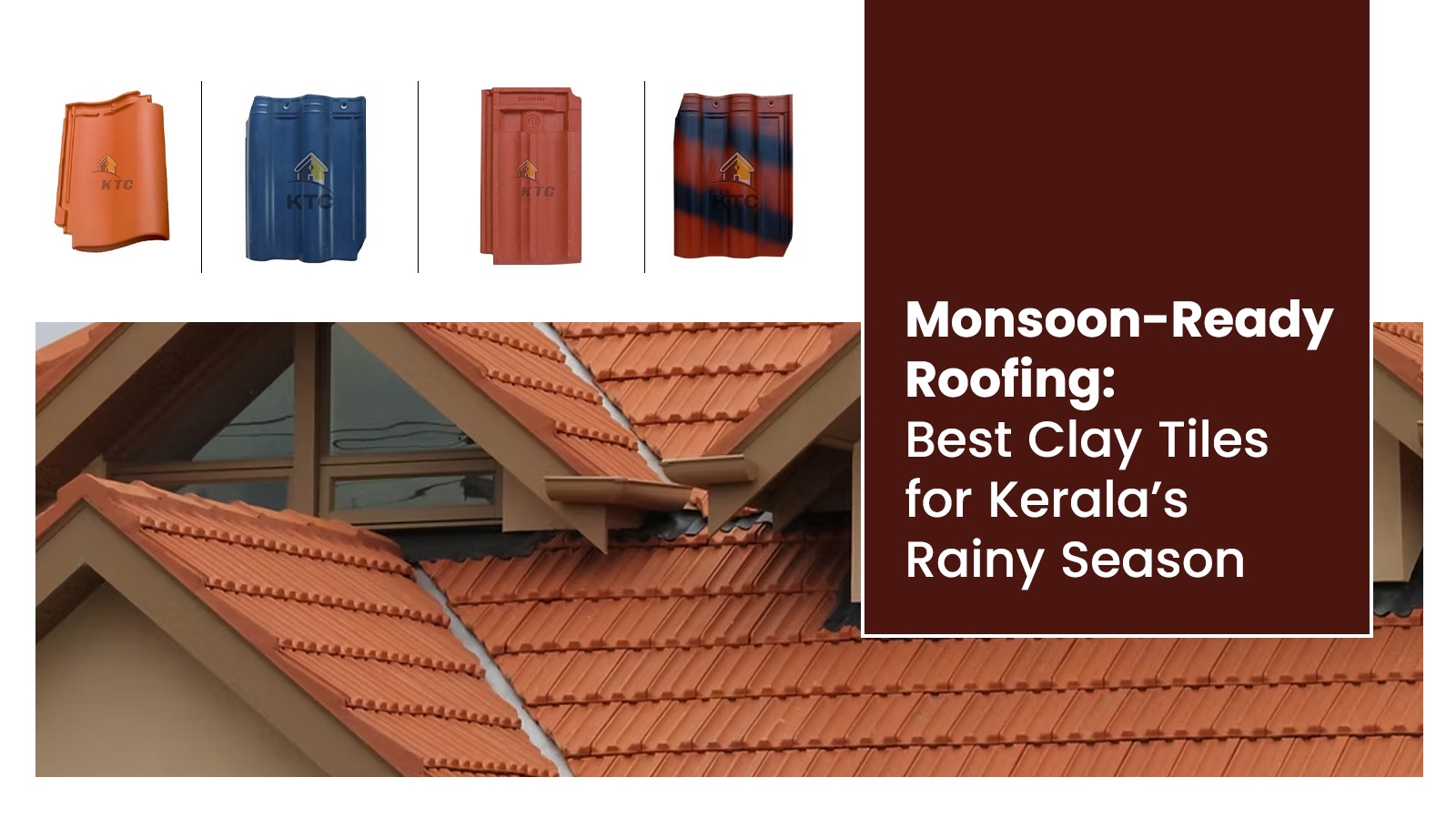
Kerala doesn't get rain — it gets weeks of it, one downpour after another, often with wind strong enough to test every joint and overlap on your roof. If your tiles weren't built with that in mind, monsoon season is when you find out the hard way: damp ceilings, leaking edges, and tiles that crack under water-logged weight.
The right roofing tile isn't a cosmetic choice in Kerala — it's a decision that determines whether your home stays dry from June through September. Here's what actually holds up, and why.
Why Ordinary Roofing Fails in Kerala's Monsoon
Three things separate a monsoon-ready roof from one that struggles every year:
- Water absorption — porous or poorly-fired tiles soak up moisture, weaken over time, and eventually crack or grow moss
- Wind resistance — Kerala's coastal monsoon winds can lift loosely interlocked or lightweight tiles
- Thermal and structural durability — repeated wet-dry cycling stresses tiles that aren't fired to the right density
This is exactly where natural clay and terracotta outperform cheaper alternatives. Properly fired clay tiles are dense, low-absorption, and interlock tightly — built to shed water fast rather than hold onto it.
Best Clay Tile Options for Rainy-Season Roofing
Mangalore Roofing Tiles The traditional choice for good reason — these tiles are specifically known for their durability and their ability to withstand heavy rain and strong winds, which makes them one of the most dependable options for Kerala homes exposed to the full force of the monsoon.
Imported Roofing Tiles Engineered for long-lasting protection in demanding weather, these tiles are built to keep homes safe through extended wet seasons without compromising on finish.
Ceramic Roofing Tiles A denser, more weather-resistant tile that holds its elegant finish year after year, even with repeated monsoon exposure — a strong option if you want durability without sacrificing a refined roofline.
Premium Roofing Tiles For homeowners who want superior protection along with a more upscale look, these tiles combine strength with a finish that suits larger, architecturally detailed homes.
What Makes Terracotta the Right Material for Kerala Homes
Every tile in our range starts from the same foundation: natural clay roofing tiles, fired for strength and finished for weather resistance. Terracotta's natural composition gives it:
- Excellent thermal insulation, keeping interiors cooler between monsoon showers and post-rain humidity
- Strong water-shedding performance thanks to tight interlocking profiles
- A finish that ages naturally rather than deteriorating, so your roof still looks right five monsoons from now
If you're planning ventilation alongside your roofing — a common need in Kerala's humid climate — our Jallies are designed to let air move through while keeping wind-driven rain out.
A Roof That's Built for Kerala, Not Just Sold in Kerala
Kerala Tiles Company has spent 15+ years manufacturing terracotta products from natural clay, with 10 factories across Kerala and Karnataka — including our branch office on NH 17 in Vadanappally, Thrissur, and our Malur unit in Karnataka. That local manufacturing footprint means our tiles are made with Kerala's climate in mind, not adapted from a design built for somewhere drier.
We work directly with builders, contractors, architects, and homeowners across Kerala to supply roofing that's matched to the actual demands of the region — heavy rainfall, high humidity, and coastal wind exposure included.
Getting Your Roof Ready Before the Rains Arrive
The best time to evaluate your roofing tiles is before the first heavy spell, not after a leak appears. If your current roof is showing cracked tiles, moss buildup, or water stains on the ceiling, it's worth a proper look now.
Explore our full range of roofing tiles or get in touch with our team for a free consultation on the right monsoon-ready tile for your home.